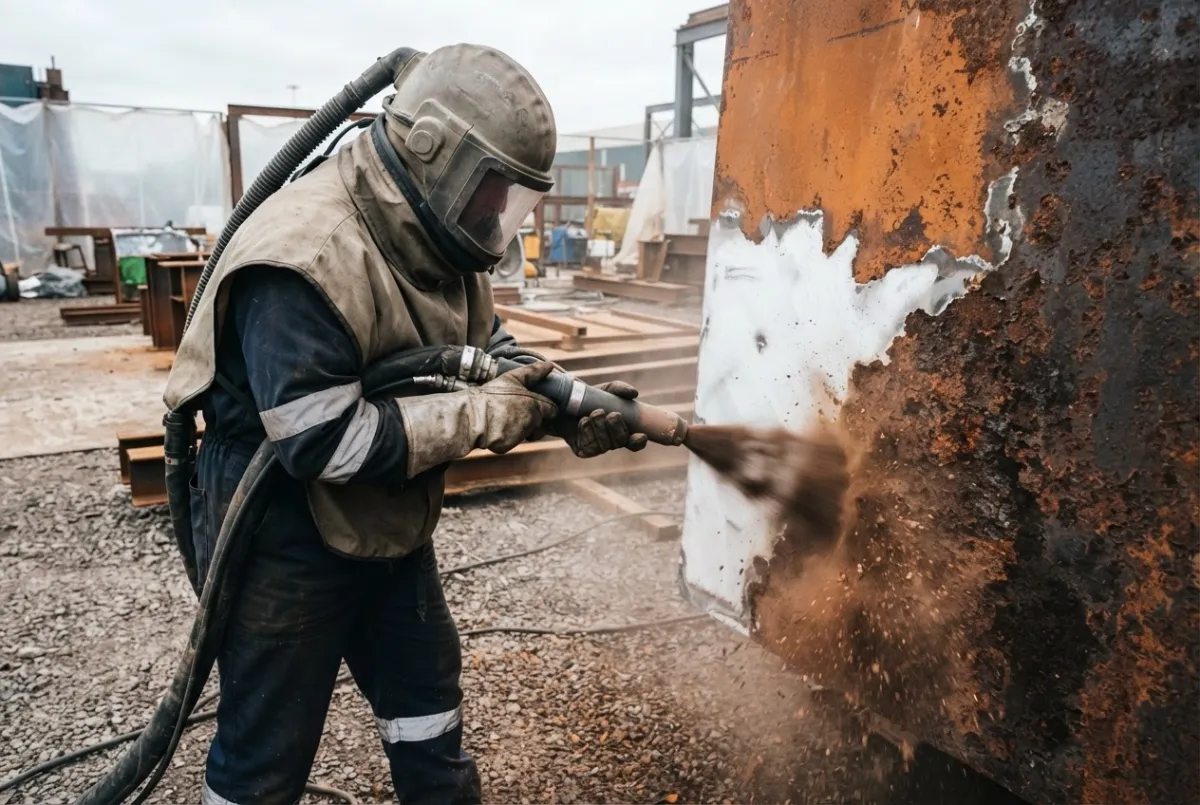
Shot Blasting & Abrasive Blasting in Teesside
Shot Blasting & Abrasive Blasting in Teesside, North East England is rarely a simple cleaning line item. Most buyers are trying to protect steel, reduce downtime, improve inspection quality or hand a prepared asset over to the next contractor without programme drift. Early coordination with Surface Preparation & Steel Pre-Treatment usually produces a better scope because the preparation standard, access method and handover point are clarified before labour is booked.
On Teesside and across the wider North East England industrial corridor, commercial value usually comes from realistic planning rather than headline rates alone. Removing rust, failed coatings and heavy contamination from structural steel, plant and industrial fabric before repair, recoating or inspection That is especially important on sites around Middlesbrough, Stockton-on-Tees, Redcar and Hartlepool where fabrication, port activity, process operations and weather exposure can all change the practical delivery method.
Why this service matters on Teesside sites
In practice, clients specify this service when operational reliability, corrosion control, access or maintenance planning all depend on a clearly defined outcome. Typical Teesside blasting scopes include fabricated steel, process supports, marine-exposed steelwork, hoppers, handrails, access structures and plant casings where the client needs a clean substrate rather than a cosmetic washdown. The best contractors therefore price the real job, not just the visible defect, because adjacent operations, release sequencing and technical finish requirements all affect the result.
Comparison table for buyers
The table below gives a practical comparison for budgeting and sequencing on Teesside industrial projects:
Work optionBest fitTypical durationExpected outcomeTargeted blast cleanOne priority defect, support or steel member1 dayFast corrosion removal before repairPhased industrial packageSeveral linked steel zones on a live site1 to 2 daysBetter control around operationsFull abrasive blasting programmeLarge structure, plant area or shutdown task2 to 4 daysBest for major recoating prep
Costs, timings and what changes the budget
Targeted Teesside work fronts often start around £2,500 to £4,500, while broader programmes with containment, access and several steel zones commonly range from £5,500 to £12,000. Smaller blast-cleaning packages can often be completed in one shift or one day, but larger industrial structures usually need two to four days once masking, debris capture and inspection stages are included. These are planning ranges rather than fixed quotations, but they reflect the labour, access, containment, supervision and coordination demands commonly seen on industrial work across Teesside.
Where method statements need to support safe delivery as well as output, buyers should expect the contractor to align the scope with HSE abrasive blasting guidance and then translate that guidance into practical controls for the actual site rather than relying on generic paperwork.
Common factors that change price
Typical cost variables include surface condition, release sequence, waste handling, access method, containment, neighbouring operations and the speed at which the cleaned or coated asset must be handed over. Local experience matters because a straightforward workshop steel package in Teesside can price very differently from a marine-linked or process-sensitive task only a few miles away.
Delivery considerations in Teesside, North East England
Teesside projects often combine fabrication yards, process sites, port-linked assets and weather-exposed structures around Middlesbrough, Stockton-on-Tees, Redcar and Hartlepool, so practical sequencing matters as much as production rate. That is why procurement teams often compare Teesside work with related regional examples such as shot blasting and abrasive blasting in North West England before finalising programme assumptions. Cross-domain comparison is useful when the surrounding asset type, exposure environment or shutdown pressure is similar enough to benchmark likely sequencing and risk.
What to confirm before mobilisation
Before mobilisation, buyers should confirm the blast standard, waste route, exclusion zones, access requirements, nearby operations and how long cleaned steel can remain before primer or topcoat application begins. Strong pre-start planning also sets out who signs off readiness, how changes are escalated and what evidence will be used to confirm the work face is complete. When the scope overlaps with follow-on protection, access or maintenance activity, it is usually worth coordinating the programme with Industrial & Protective Coatings so the same structure does not need to be revisited under a second mobilisation.
Frequently asked questions
When is abrasive blasting better than washing or scraping?
It is usually better when corrosion, scale or failed coatings are too established for manual or washdown methods to achieve a reliable preparation standard.
What changes the price most on a Teesside project?
Surface condition, access difficulty, containment, square meterage and the finish standard required before the next trade starts are usually the biggest cost drivers.
Can blasting be planned around live operations?
Yes. The strongest programmes phase the work so exclusions, debris control and follow-on inspection can be managed without unnecessary disruption.
Request a Teesside project survey
If you need shot blasting & abrasive blasting in Teesside, North East England, visit https://industrialshotblastingteesside.co.uk/ to request a survey-led quotation, a realistic budget range and a programme built around live operations, shutdown windows and long-term asset performance.