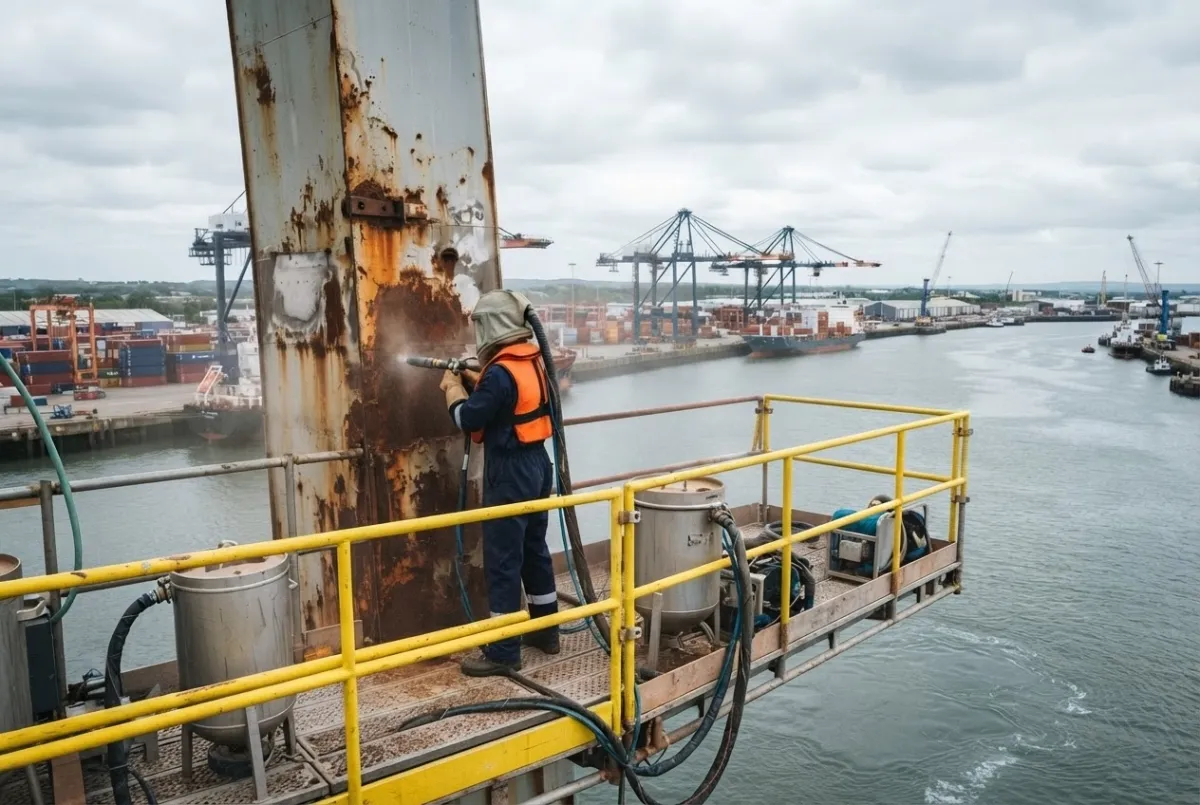
Shot Blasting for Ports & Marine Infrastructure on the Tees Estuary
Marine structures on and around the Tees Estuary face salt contamination, tidal moisture, abrasive weather and hard industrial use, so surface preparation has to be faster and more disciplined than inland work. Across Middlesbrough, Stockton-on-Tees, Redcar, Hartlepool and the wider North East, buyers normally want a method that improves inspection visibility, protects steel and keeps maintenance work on programme.
In practice, the right scope depends on the substrate, the access method, the required finish and what happens after blasting. That is why early alignment with marine and offshore surface preparation helps clients avoid rework and line up the next contractor before labour is booked.
Why this matters on Teesside projects
Clients usually need blasting for lock gates, quay steel, handrails, ladders, jetties, access structures and offshore-linked fabrications where corrosion control directly affects safety and asset life. When the end goal is long-term asset protection rather than simple cleaning, it also makes sense to coordinate with industrial painting and corrosion protection so the prepared surface is handed over at the correct point in the programme.
Teesside buyers generally get the best value when the specification is tied to a real engineering outcome such as coating adhesion, inspection access, weld repair, shutdown readiness or corrosion control. Strong survey work turns a vague cleaning brief into a practical production plan.
How the work is usually delivered
Successful marine packages start with contamination testing and access planning, then move into phased blasting, cleanup and rapid handover for coating. Delays between preparation and coating are especially costly in estuary conditions because salt and moisture can return to the surface quickly. Using a verified regional comparison such as dockside cleaning in Liverpool can also help procurement teams benchmark labour logic, sequencing and likely hold points before they commit to a final scope.
The best delivery plans define the workface, the preparation standard, the waste route, the inspection sign-off and the moment at which the asset moves safely to the next trade. That clarity is what keeps programmes moving on busy industrial sites across Teesside and the North East.
What buyers should confirm before mobilisation
Before labour is booked, clients should confirm access, sequencing, environmental controls, inspection responsibilities, working hours and how the prepared surface will be protected if the next trade cannot start immediately. Those details are often what separate a smooth project from a costly second mobilisation.
Buyers should also check whether the scope sits on a live site, inside a shutdown, near marine exposure or within a confined or elevated workface. Each of those conditions changes the method, the supervision level and the realistic production rate.
| Scenario | Typical scope | Typical programme | Commercial outcome |
|---|---|---|---|
| Targeted marine repair | One quay zone, ladder or rail line | 1 day | Fast local corrosion treatment |
| Phased dockside programme | Several marine workfaces | 2 to 3 days | Best around live port operations |
| Major estuary refurbishment | Large steel packages with access and containment | 3 to 5 days | Supports long-term marine coating systems |
Programme, cost and commercial planning
Most commercial planning ranges sit around £3,500 to £15,000, depending on tidal access, containment, over-water working, contamination levels and the speed of the coating follow-on. In many cases, the visible surface area is only one part of the quotation. Access changes, weather exposure, containment, shift patterns, waste handling and inspection hold points often decide the real cost.
Key cost drivers
Procurement teams should check the substrate condition, the amount of failed coating to remove, neighbouring operations, traffic routes, permit constraints and the speed at which the cleaned steel must be handed over. Those variables have a bigger impact on budget than headline day rates, which is why HSE abrasive blasting guidance should sit behind a site-specific method rather than a generic statement.
Common mistakes and risk points
The biggest mistake is treating a marine asset like normal external steelwork. Salt testing, weather windows, port interfaces and the coating turnaround time are all more critical near the estuary. Another common problem is separating blasting from access, coatings or shutdown planning in the quotation stage. On live industrial sites, those scopes interact with each other, so a joined-up plan usually saves both time and money.
Local knowledge matters as well. Work that looks simple on a drawing can behave very differently on a marine-exposed asset, a congested process structure or a live fabrication site in the Teesside industrial corridor.
Frequently asked questions
Why does marine blasting cost more?
Extra access, containment, weather exposure and contamination control usually add labour and supervision compared with inland steelwork.
Can blasting be done during live port activity?
Yes, provided the work is phased around traffic, permits, vessel movements and safe segregation from adjacent operations.
Is coating timing especially important?
Yes. The longer a cleaned marine surface is left exposed, the greater the risk of contamination or flash rust before the first coat goes on.
Request a Teesside quotation
If you need advice on this topic, contact Alternative Cleaning Solutions (NW) Ltd for a survey-led quotation, realistic programme guidance and a scope built around your site conditions. Homepage: https://industrialshotblastingteesside.co.uk/